


You May Think You Know Italian Luxury
Three summers ago, in the quiet square of Piazza della Gogna in Marciana — a small medieval village on Elba Island, where I now live — I met a man who quietly changed the way I look at luxury.
He and his wife – a wonderful woman over 40 – had stopped me to ask for directions. As often happens among Italians, one question led to another, and then another, until we found ourselves deep in conversation about Florence, craftsmanship, and life on the island.
At some point, his eyes rested on the bag I was carrying — a vintage woven leather piece I’ve always loved more for its texture than for its name (Fontanelli Reco’s).
He smiled, with the unmistakable expression of someone who truly understands leather.
“You have a good eye,” he said.

Only later did I discover that this discreet, almost unassuming man from Prato was one of the master craftsmen behind some of the most extraordinary handbags produced for major international luxury houses.
He had worked on creations carried on red carpets around the world — including a remarkable diamond-covered piece designed under the direction of Alexander McQueen and worn by Nicole Kidman at the Golden Globe Awards.
And yet, there he stood. No logos. No visible symbols of status. Just presence.
That evening, he shared something with me that I have never forgotten. Luxury, he explained, often exists in layers.
There are objects made to be recognised instantly — and others made for those who don’t need recognition at all.
A few months later, he passed away unexpectedly. What I had assumed was simply a serendipitous summer encounter slowly revealed itself as something else entirely: a lesson.
Since that evening, I’ve never looked at handbags in quite the same way.
You may think you know Italian luxury.
But there is a part of it that never poses for photographs.
The Luxury Everyone Knows
When we think of Italian luxury, most of us picture recognisable names, iconic logos, and bags that speak a very clear visual language.
These objects do exactly what they are designed to do: they communicate success, taste, and belonging at first glance.
And there is nothing inherently wrong with that.

Fashion has always been a form of expression, and visibility can be joyful.
A logo can carry memories, confidence, even a sense of play. I own logoed bags myself, and I love them for what they represent in my personal story.
Recognition is a form of pleasure.
But it is only one expression of luxury.
The Luxury Few Notice
In Italy, there has always existed another way of understanding elegance — one that values discretion over display.
There is a word we use often: riservatezza. It doesn’t mean hiding. It means knowing when not to speak, when not to show, when to let things exist without explanation.

This mindset extends to objects as much as it does to behaviour. Some of the most refined things in Italian culture are not immediately noticeable.
They reveal themselves slowly — through materials, through balance, through time.
In this context, luxury is not something that announces itself. It’s something you recognise only if you know where — and how — to look.
What Real Italian Craftsmanship & Elegance Look Like
Italian craftsmanship is rarely loud, but it is always precise.

It lives in details that don’t photograph well on social media:
Hand-painted edges that soften with age
Saddle stitching that remains intact for decades
Woven leather techniques that require hours of manual work
The weight of a well-balanced handle
The smell of untreated leather in a workshop
These are not design tricks. They are inherited gestures, passed down through generations.
True craftsmanship isn’t about novelty. It’s about continuity.
And continuity requires patience — something that can’t be rushed or mass-produced.
The Italian Culture of Discreet Wealth

Growing up Italian, you learn early that money is rarely the most interesting thing about a person.
Education, manners, family history, and taste matter more than numbers.
Displaying wealth too openly has often been considered inelegant — not because wealth is shameful, but because refinement lies in restraint.
When you look at historic Italian families — from the industrial legacy of the Agnelli family to noble houses such as the House of Visconti, the Colonna family, or the House of Este — what stands out is not excess, but continuity.
Old palaces. Tailored clothing. Objects meant to last generations.
The same cultural instinct can be found among families like the Bentivoglio family or the Borghese family. Wealth, in these contexts, was never something to announce. It was simply woven into daily life.
This doesn’t mean Italy rejects modernity or visibility — but it does mean that, in certain environments, discretion has long been considered a form of elegance.
A Moment That Made Me Uncomfortable

I was reminded of this not long ago, during a high-society gathering here on the island.
A young woman arrived carrying a very recognisable, logo-heavy handbag. She was beautiful, appropriately dressed, and clearly confident.
And yet, as she moved through the room, I noticed subtle glances. Whispered comments. A pause that felt heavier than curiosity.
It took me a moment to understand what was happening — and when I did, it made me uncomfortable. 😐 Not because of her, but because of the unspoken rules at play.
No one had explained them to her. No one ever does.
In certain circles, visibility is not always read as confidence. Sometimes, it’s simply read as noise.
Standing there, I realised how easily elegance can be misunderstood when cultural context is missing — and how silent these codes truly are.

That moment stayed with me longer than I expected.
Not because of the glances or the whispers, but because it reminded me how deeply layered human society still is — even when we like to believe we’ve moved past those distinctions.
We often tell ourselves that style is a form of free expression, and in many ways it is. Yet certain environments operate according to unspoken codes that predate us, codes we are never formally taught.
Etiquette exists precisely because it doesn’t announce itself, and judgement often lives in that silence. It doesn’t always come with malice; sometimes it simply comes with tradition.
Realising this didn’t make me uncomfortable with fashion — it made me more aware of context, and of how easily elegance can be misread when the rules are invisible.
The Italian Houses That Don’t Need to Shout
Discreet luxury bag brands rooted in Italian craftsmanship
Valextra — The Milanese Art of Quiet Luxury Bags


Italian leather goods since 1937
Milanese rigor, distilled
Founded in Milan in 1937, Valextra has always stood slightly apart from the Italian luxury narrative most people know. No overt references to Tuscan romanticism, no baroque excess — just architecture, precision, and restraint.
Its roots are deeply Milanese: rational, almost intellectual. Every line is intentional, every proportion studied. Even the signature Costa lacquered edge — a detail copied endlessly since — was never meant to be decorative, but functional.
Valextra bags are not seasonal objects. They’re tools for life: meant to age slowly, discreetly, beautifully. You’ll never see a logo screaming for attention; the brand’s confidence lies in the exact opposite.
Price range: high luxury, generally €2,000–€5,000
For whom: those who believe understatement is the ultimate form of sophistication
Serapian — Hand-Woven Leather Bags and Milanese Craft Heritage


The Mosaico technique as a philosophy
The poetry of patience
Serapian was born in Milan in 1928, but its soul belongs to time itself. The House is famous for its Mosaico technique — an intricate, hand-woven leather method that requires hours, sometimes days, of meticulous work.
Each Serapian piece feels intimate, almost personal, as if it were made with you rather than for you. There’s a softness here — not just in the leather, but in the philosophy. Luxury as a quiet companion, not a statement.
Serapian doesn’t chase trends. It refines gestures. It believes that what is made slowly is understood deeply.
Price range: €1,800–€4,000
For whom: collectors of discreet beauty and tactile pleasure
Fontana Milano 1915 — The Insider


Over a century of discreet excellence
The hidden atelier of Milan
Fontana Milano 1915 is one of those names whispered among insiders. Founded over a century ago, the House has long served a private clientele — including aristocratic families and institutions — without ever needing mass recognition.
Each piece is rigorously handcrafted, with an almost monastic dedication to quality. No logos, no concessions. Just leather, form, and heritage.
It’s the kind of brand you inherit rather than discover.
Price range: €2,000–€6,000
For whom: those who understand luxury as continuity
Bianchi e Nardi 1946 — Florentine Handcrafted Leather Bags for Life


The Florentine Traditionalist
Florentine soul, global discretion
Born in Florence just after the war, Bianchi e Nardi built its name through uncompromising craftsmanship and a loyal, international private clientele.
The brand is particularly beloved in Japan — a market that deeply understands artisanal excellence. Bags are sculptural, durable, and made to be used for decades.
No noise, no performance. Just substance.
Price range: €1,200–€3,500
For whom: long-term thinkers, not impulse buyers
Boldrini Selleria since 1955 – Traditional Italian Leather Craft Without Excess


The Purist
Tradition, without nostalgia
Boldrini Selleria comes from the world of saddlery — and it shows. Every piece carries the discipline of function-first craftsmanship, elevated into refined leather goods.
This is heritage without stiffness, tradition without dust. The bags feel honest, robust, and quietly elegant.
Price range: €500–€1,200
For whom: those who value integrity over spectacle
Rodo — Italian Evening Bags for Women Who Don’t Perform Luxury


The Elegant Host
Eveningwear, whispered
Rodo is one of those names you rarely hear — yet you’ve definitely seen it, often carried by women who never feel the need to explain themselves.
Specialised in evening bags and refined accessories, Rodo has mastered a delicate balance: elegance without stiffness, glamour without excess. Satin, silk, metallic meshes — always handled with restraint.
These are bags chosen for intimate dinners, private events, moments that don’t need documentation. They shine quietly, then disappear back into the night.
Price range: €700–€1,500
For whom: women who understand that true glamour never needs volume
👉 You can watch my YouTube video “The Only Five Bags A Woman Needs” here.
Lets’s Demystify Quiet Luxury
In case you’re late to the party, quiet luxury and old-money aesthetic -as just mentioned in my short introduction above- are a fashion concept that emphasizes understated elegance and refined sophistication without overt branding or flashy designs.
It focuses on high-quality materials like pure linen, cotton, wool, cashmere etc., on timeless pieces, and impeccable craftsmanship, rather than loud logos or trendy items.
The essence of old-money aesthetic is subtlety and class, reflecting a sense of confidence and sophistication that doesn’t need to shout for attention: Less is More!
Origin Of The Term “Quiet Luxury”
The term likely emerged as a response to the growing preference for subtle sophistication over ostentatious displays of wealth.
While it is difficult to pinpoint an exact origin, the concept gained traction as consumers began seeking more meaningful and sustainable fashion choices. The movement reflects a shift towards valuing quality and longevity over temporary trends and conspicuous consumption.
Same Concept, Different Interpretations
Though the core principles of quiet luxury—such as quality, craftsmanship, and timeless elegance—may be universal, the specific interpretations and expressions of these values can vary significantly depending on cultural influences, societal norms, and individual preferences within each region.
The perception of quiet luxury can indeed vary significantly across different cultures and regions of the world. Here’s a brief overview of potential differences:

Europe:
- Emphasis on Heritage: In Europe, quiet luxury often emphasizes heritage brands with a long history of craftsmanship and tradition.
- Understated Elegance: European quiet luxury tends to favor understated elegance, with an emphasis on timeless pieces and subtle sophistication.
- Quality Over Quantity: There’s a preference for high-quality materials and craftsmanship, with an appreciation for items that are built to last.
Emirates (Middle East):
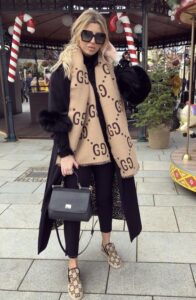
- Opulence and Exclusivity: In the Emirates, quiet luxury may be associated with opulence and exclusivity, with a focus on designer brands (with screaming logos) and extravagant displays of wealth.
- Attention to Detail: There’s a high value placed on fine details and luxurious finishes, with an emphasis on quality and craftsmanship.
- Brand Recognition: Designer labels and recognizable luxury brands often play a significant role in defining quiet luxury in this region.

Japan:
- Minimalist Aesthetics: In Japan, quiet luxury often aligns with minimalist aesthetics and a focus on simplicity and functionality.
- Attention to Craftsmanship: There’s a deep appreciation for traditional craftsmanship and attention to detail, with a preference for items that are beautifully made and thoughtfully designed.
- Quality Materials: Japanese quiet luxury may prioritize natural, high-quality materials and sustainable practices.

Africa:
- Cultural Influences: In Africa, quiet luxury may be influenced by diverse cultural traditions and aesthetics, with a focus on artisanal craftsmanship and unique design elements.
- Celebration of Heritage: There’s a growing movement towards celebrating African heritage and supporting local artisans and designers, which may shape perceptions of quiet luxury in the region.
- Innovation and Creativity: African quiet luxury may be characterized by innovation and creativity, blending traditional techniques with contemporary design concepts.
Influence & Popularity
Quiet luxury has become increasingly popular, driven by several factors:
- Sustainability: The focus on high-quality, durable items aligns with sustainable fashion practices, reducing the need for frequent replacements.
- Cultural Shift: A growing appreciation for minimalism and understated elegance has influenced fashion trends.
- Economic Considerations: Consumers are more mindful of their purchases, preferring to invest in timeless pieces rather than fleeting trends.
Four Quiet Luxury Influencers I Follow On Instragram


How To Achieve Quiet Luxury (On A Budget)
Quiet luxury is about creating a wardrobe that speaks volumes through its quality and timeless elegance, reflecting a sophisticated and discerning taste that transcends trends.
Here are the steps that will lead you to get the style:

Invest in Quality Basics: Start with high-quality basics like a well-fitted blazer, a classic trench coat, and a pair of tailored trousers.
👉 SHOP the item HERE or CLICK on the image.

Choose Timeless Pieces: Focus on items that won’t go out of style, such as a little black dress or a cashmere sweater.
👉 SHOP the item HERE or CLICK on the image.

Opt for Neutral Colors: Build a versatile wardrobe with neutral tones that can be easily mixed and matched.
👉 SHOP the item HERE or CLICK on the image.

Accessorize Minimally: Choose simple, elegant accessories like a leather tote bag or a pair of classic loafers.
👉 SHOP the item HERE or CLICK on the image.
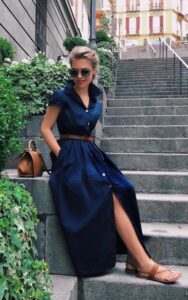
📌 Pay Attention to Fit: Ensure that your clothes fit well and are tailored if necessary.
Creating a Quiet Luxury Wardrobe
By following the steps listed below, you can create a wardrobe that speaks volumes through its quality and timeless elegance.
Each piece will reflect a sophisticated and discerning taste, allowing you to maintain a refined style that transcends passing trends.
Quiet luxury as well as old-money aesthetic are about making deliberate choices that prioritize longevity, craftsmanship, and subtlety, resulting in a wardrobe that exudes confidence and sophistication.

Invest in High-Quality Basics:
- Classic Outerwear: Start with foundational pieces like a well-tailored trench coat, a versatile wool overcoat, and a classic blazer. These items should be made from high-quality materials and constructed to last for many years.
- Essential Knitwear: Choose sweaters and cardigans made from luxurious fabrics such as cashmere, merino wool, or alpaca. These items provide comfort and elegance and can be worn across multiple seasons.

Prioritize Timeless Pieces:
- Little Black Dress (LBD): A perfectly fitted LBD is a quintessential item for any wardrobe. It can be dressed up or down for various occasions.
- White Button-Down Shirt: This versatile piece can be paired with trousers, skirts, or jeans and is appropriate for both casual and formal settings.
- Tailored Trousers: Invest in a pair of high-quality, well-fitted trousers in a neutral color like black, navy, or gray if you’re on to darker shades, or creamy white, beige and camel if light hues are more your vibe. These can be paired with various tops for a polished look.
👉 SHOP the item HERE or CLICK on the image.

Opt for Neutral Colors:
- Versatile Palette: Build your wardrobe around neutral tones such as black, white, beige, forest green, khaki, gray, and navy.
These colors are timeless and can be easily mixed and matched to create numerous outfits.
- Accent Colors: Occasionally incorporate muted accent colors like burgundy, olive, or soft pastels to add variety without overwhelming the understated aesthetic.
👉 SHOP the item HERE or CLICK on the image.

Focus on Fit and Tailoring:
- Perfect Fit: Ensure that every piece in your wardrobe fits you perfectly. This might mean getting items tailored to your measurements.
Well-fitted clothing enhances your appearance and exudes refinement.
- Attention to Detail: Pay attention to small details like the cut of a sleeve, the drape of a fabric, and the alignment of seams.
These subtle elements contribute to the overall elegance of the garment.
👉 SHOP the item HERE or CLICK on the image.

Choose Minimalist Accessories:
- Elegant Bags: Opt for classic leather bags in neutral colors. A structured tote, a sleek crossbody, and a refined clutch are versatile choices.
- Simple Jewelry: Select delicate and timeless pieces such as pearl studs, a simple gold or silver bracelet, and a classic wristwatch. Avoid overly flashy or trendy jewelry.
- Quality Footwear: Invest in a few pairs of high-quality shoes like leather loafers, classic pumps, and versatile ankle boots. These should be comfortable and durable, adding to your overall polished look.
👉 SHOP the item HERE or CLICK on the image.
Emphasize Subtle Sophistication:
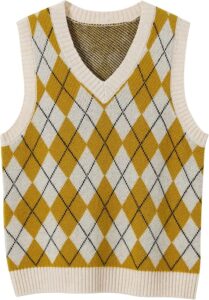
- Understated Patterns: If you incorporate patterns, choose subtle ones like pinstripes, houndstooth, or small checks. These add interest without being overpowering.
- Luxury Fabrics: Prioritize garments made from luxurious materials like silk, cashmere, wool, and high-quality cotton. The feel and appearance of these fabrics contribute to the quiet luxury aesthetic.
👉 SHOP the item HERE or CLICK on the image.

Practice Thoughtful Curation:
- Edit Your Wardrobe: Regularly assess your wardrobe and remove items that no longer fit your style or meet your quality standards.
Focus on curating a collection of pieces that you love and wear often.
- Mindful Shopping: Make considered purchases, focusing on items that complement your existing wardrobe and offer long-term value.
Avoid impulse buys and trendy pieces that may not stand the test of time.
Consider looking for vintage pieces in second-hand and charity shops: you’ll be amazed by the high-quality items in these places!
In conclusion, embracing the old-money aesthetic is about more than just looking luxurious—it’s about embodying true elegance in every aspect of your life.
While a carefully curated wardrobe and high-quality pieces are essential, they are only part of the equation.
True elegance comes from within, reflected in your education, your savoir-faire, and the way you carry yourself.
It’s the subtle grace in your movements, the tone of your voice, and the kindness in your interactions that truly define a luxurious presence.
Cultivating an air of sophistication involves continual learning, appreciating the finer things with humility, and understanding that refinement is not just worn, but lived.
Remember, anyone can dress the part, but genuine elegance is a holistic pursuit that transcends mere aesthetics. Embrace these principles, and you’ll exude a timeless charm that speaks volumes beyond what meets the eye.
As always, happy styling!
XOXO
B&TG
That Evening In Marciana…
…, I thought I had simply met a craftsman.
In reality, I had glimpsed an entire philosophy — one that lives quietly in workshops, in gestures, and in objects made to outlast trends.
Italian luxury was never designed to compete for attention.
It was designed to endure — quietly, confidently, and for a lifetime.
Perhaps true elegance is not about expressing ourselves without limits, but about understanding the language of the spaces we move through — and choosing, consciously, when to speak softly.
Yours,
Agnese K


